
Nursing Workforce Retention Implementation Playbook
Nursing Workforce Retention Implementation Playbook
Action-Oriented Guide for Healthcare Leaders
Based on Retaining North Carolina’s Nursing Workforce: A Playbook for Healthcare Leaders
11,214
nursing personnel surveyed
6
evidence based recommendations
3
positions: RNs, LPNs, CNAs
Overview
The recommendations in this playbook are informed by findings from Retaining North Carolina’s Nursing Workforce: A Playbook for Healthcare Leaders (Jones CB, Kim S, Barrett J, Forcina J. 2026) and relevant literature on nurse retention, quality improvement, implementation science, and workforce development.
Implementation and Action-Based Steps
The action-planning processes and methods presented in this playbook were developed by NC Center on the Workforce for Health through the synthesis and application of healthcare administration, data tools, implementation science, quality improvement, and workforce-development principles to the nurse retention context. The process is intended to provide a practical structure for translating survey findings into locally appropriate action.
Use of External Frameworks
Where established frameworks, models, tools, or methodologies are incorporated or adapted, the original sources are cited within the relevant sections.
Objective
This implementation playbook transforms the research recommendations into specific operational actions leaders can execute over the next 12–24 months. The survey of more than 11,000 nursing professionals found that retention is driven primarily by six factors:
- Compensation & Benefits (pg. 8)
- Wellness & Work-Life Balance (pg. 11)
- Positive Work Environment (pg. 13)
- Recognition & Staff Value (pg. 16)
- Career Development (pg. 18)
- Organizational Relationships (pg. 21)
These factors directly influence turnover, engagement, quality outcomes, and workforce stability. Below, we outline the recommendations and actions and provide high-level frameworks or guidance for implementing some of these strategies.
Recommendation 1: Compensation & Benefits
Why This Matters
Better pay was identified as the #1 reason nurses consider leaving their positions across all roles and settings. Compensation-related concerns are among the strongest predictors of turnover.
Actionable strategies (pg. 9 of the report):
- Establish transparent pay-increase structures
- Conduct annual market-rate reviews
- Implement cost-of-living adjustments
- Offer sign-on and retention bonuses
- Enhance benefits packages
- Ensure pay equity

The following section highlights relevant implementation tips and research-based models that offer additional insight and practical guidance. These resources are intended to expand on the recommendations discussed in the report, illustrate how these strategies can be applied, and provide actionable approaches for translating the concepts into practice.
Recommendation 1: Implementation Resources
Conducting a compensation audit for nurses in a healthcare setting involves a systematic review of pay structures, market rates, and internal equity to ensure fair and competitive pay. This approach draws on established quality-improvement and clinical-audit principles, including defining the problem, assessing current practice, and identifying opportunities for improvement (Limb et al., 2017).
1. Define Objectives and Scope
- Establish goals: Determine if the audit focuses on internal pay equity, external market competitiveness, gender/racial pay gaps, or total rewards equity.
- Determine scope: Decide whether to review all nursing tiers (e.g., CNAs, RNs, Nurse Practitioners, Clinical Nurse Specialists) across the entire organization or target specific high-turnover departments.
2. Assemble a Cross-Functional Audit Team
- Involve key stakeholders: Include representatives from Human Resources, Compensation and Benefits, Nursing Leadership, Finance, and Legal/Compliance.
- Ensure neutrality: Designate impartial analysts or external consultants to evaluate data objectively without internal bias.
3. Gather and Validate Data
- Collect compensation metrics: Gather base pay, shift differentials, overtime, bonuses, hazard pay, and total compensation packages.
- Compile employee attributes: Match compensation data with job titles, years of experience, tenure at the institution, education level, specialty certifications, and performance ratings.
- Benchmark external data: Pull regional and national healthcare salary benchmarks using trusted nursing compensation surveys.
4. Analyze Internal Equity and External Competitiveness
- Evaluate internal equity: Compare pay rates among nurses with similar qualifications, responsibilities, and experience to flag unexplained disparities.
- Calculate the compa-ratio: Divide each nurse’s actual salary by the midpoint of the designated salary range for their role to identify outliers (underpaid or overpaid staff).
- Assess market competitiveness: Compare average organizational pay against local and regional market rates to evaluate risks of nurse turnover.
5. Identify Gaps and Action Planning
- Pinpoint disparities: Document any systemic pay compression, wage stagnation, or demographic pay gaps.
- Create a remediation plan: Develop budget adjustments and timelines to correct unjustified pay discrepancies.
- Update salary bands: Revise job descriptions and pay structures to align with current healthcare market realities.
6. Monitor and Re-Audit
- Communicate findings: Share high-level insights transparently with organizational leadership and staff where appropriate.
- Establish a continuous cycle: Schedule routine follow-up audits annually or biannually to maintain equitable and competitive nurse compensation.
Healthcare leaders and human resource professionals may benefit from implementing or strengthening transparent compensation policies to address concerns related to fairness, employee satisfaction, and retention (Perkins, 2025). One of the ways to establish this is by creating the following elements and embedding them into your organizational culture:
- Written compensation philosophy
- Pay progression matrix (Salary.com Staff, 2025)
- Annual increase schedule
- Market adjustment process
Example:
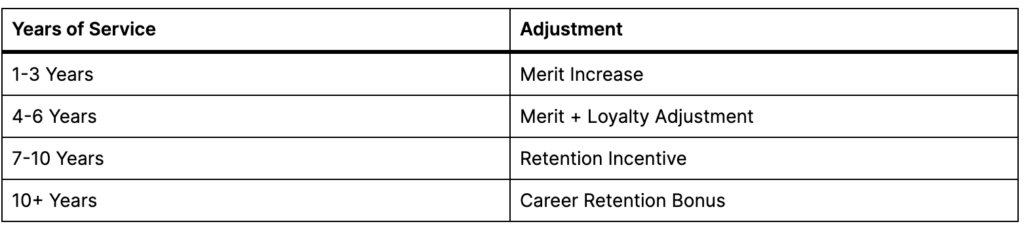
Rather than focusing solely on hiring bonuses, your organization could also adopt a retention bonus policy. The NC State Human Resources (.gov) provides a sample sign-on and retention bonus policy on their website:
Common retention bonus timelines are:
- 3-Year Retention Bonus
- 5-Year Retention Bonus
- 10-Year Legacy Bonus
The creation of this policy is one way to reinforce long-term organizational commitment.
Data provided by the North Carolina Healthcare Association (NCHA) in their 2024 North Carolina Healthcare Association Critical Workforce Needs Assessment highlighted competitive benefits packages as essential anchors for retaining clinical talent.
Priority benefits may include:
- Tuition reimbursement
- Student loan support
- Childcare assistance
- Enhanced PTO
- Retirement matching
Recommendation 2: Promote Wellness & Work-Life Balance
Why This Matters
Work-life balance, scheduling flexibility, and burnout were among the leading drivers of turnover across nursing groups. Burnout was one of the top 4 reasons for turnover across all position roles surveyed.
For CNAs, schedule flexibility is the single most important factor in preventing internal turnover (46%), especially for nursing personnel under 30.
Actionable strategies:
- Implement self-scheduling systems
- Offer diverse shift options
- Create predictable schedules
- Enable easy shift-swapping
- Expand PRN and part-time options
- Limit mandatory overtime

The following section highlights relevant implementation tips and research-based models that offer additional insight and practical guidance. These resources are intended to expand on the recommendations discussed in the report, illustrate how these strategies can be applied, and provide actionable approaches for translating the concepts into practice.
Recommendation 2: Implementation Resources
Create a reasonable standard- an implementations lens
In a 2025 study, staff nurses and nurse managers identified several practical, low-cost strategies that healthcare organizations can implement to improve scheduling practices (Stimpfel et al., 2025). Some of those practices included:
- Involving staff nurses in scheduling decisions and empowering them to develop innovative, flexible solutions to staffing challenges. For example, organizations could pilot schedules that allow nurses to work four 10-hour shifts per week instead of five 8-hour shifts.
- Broadening the range of employee preferences considered during the scheduling process, such as preferences for consecutive versus non-consecutive workdays.
- Allowing nurses to request planned time off for medical appointments and other self-care activities.
These findings suggest that meaningful improvements in scheduling can often be achieved through greater employee involvement, flexibility, and support for work-life balance, without requiring substantial organizational investment.
Example:
Create a Leader Checklist
- Publish schedule deadline
- Minimize last-minute changes
- Track schedule change requests
Pilot Units
Another way to support scheduling efforts would be to implement pilots rather than making changes all at once. By beginning with a smaller unit, time can be taken to work out kinks within the system and perfect it for broader healthcare implementation.
Important elements to think about as your organization begins this pilot would be:
- Identifying high-pressure medical teams
- Provide clear instructions within agreed-upon time parameters
- Conduct at least 3 cycles and facilitate retrospective meetings after each cycle to learn where barriers or opportunities arise
- Measure trends of patient satisfaction and employee satisfaction after each cycle
Reducing reliance on overtime is critical to retaining a stable nursing workforce and ensuring high-quality patient care. Healthcare organizations must focus on strategies that improve workforce sustainability rather than relying on existing staff to absorb staffing gaps through additional overtime. Jones’ report emphasizes that manageable workloads, supportive work environments, and work-life balance are among the key factors influencing nurses’ decisions to remain in their positions. Excessive overtime can contribute to fatigue, burnout, and turnover, creating a cycle that further strains the workforce. By reducing overtime dependence and investing in staffing practices that support employee well-being, healthcare organizations can improve retention, stabilize teams, and better position themselves to meet growing patient care demands. Below is one example of how to reduce dependence on overtime.
Conduct Monthly Reviews
Monthly workforce reviews help healthcare organizations identify staffing pressures before they become chronic retention and patient safety issues. Regular review of overtime, vacancy coverage, and fatigue-related indicators allows nursing leaders to make proactive staffing adjustments, improve workforce sustainability, and reduce burnout.
Sample Monthly Review Process
1. Analyze Mandatory Overtime Hours
- Develop targeted action plans for units with recurring overtime requirements.
- Track total mandatory overtime hours by unit, shift, and employee group.
- Identify units exceeding established thresholds (for example, more than 5% of worked hours coming from mandatory overtime).
- Review patterns such as frequent call-outs, vacancy-related coverage needs, or seasonal surges.
Questions to Ask:
- Which units generated the most mandatory overtime this month?
- Is overtime being driven by vacancies, turnover, leave usage, or scheduling inefficiencies?
- Are specific shifts consistently understaffed?
Success Metric: Reduce mandatory overtime hours month-over-month and maintain overtime utilization below predetermined organizational benchmarks.
2. Monitor Open Shifts
- Review the total number of unfilled shifts and the percentage filled internally versus remaining vacant.
- Identify high-risk units experiencing persistent scheduling gaps.
- Evaluate scheduling practices, float pool utilization, and staffing pipeline effectiveness.
- Use predictive scheduling to identify future coverage risks.
Questions to Ask:
- Which units have the highest number of open shifts?
- How many shifts required last-minute coverage?
- Are certain days, weekends, or shift types consistently difficult to fill?
Success Metric: Decrease the percentage of shifts requiring urgent staffing interventions.
3. Evaluate Agency Utilization
- Monitor agency nurse hours and associated costs by unit.
- Compare agency usage trends to vacancy rates and overtime trends.
- Assess whether agency staffing is serving as a temporary solution or becoming a long-term dependency.
- Develop plans to convert recurring agency positions into permanent hires where feasible.
Questions to Ask:
- Which units rely most heavily on agency staff?
- What is the monthly spend on agency coverage?
- Are agency staff being used because of vacancies, turnover, or recruitment delays?
Success Metric: Reduce agency utilization rates while maintaining safe staffing levels and patient care quality.
4. Monitor Fatigue Indicators
Fatigue is often an early warning sign of burnout, turnover risk, and patient safety concerns.
Review:
- Consecutive shifts worked
- Consecutive overtime shifts
- Missed meal and rest breaks
- Sick leave utilization
- Employee Assistance Program (EAP) referrals
- Fatigue-related incident reports
- Staff engagement or pulse survey results
- Turnover intentions identified through manager check-ins
Questions to Ask:
- Are staff regularly working beyond scheduled hours?
- Are fatigue-related incidents increasing?
- Do engagement surveys indicate concerns about workload or burnout?
- Are specific teams showing signs of staffing strain?
Success Metric: Decrease fatigue-related indicators while improving employee satisfaction and retention measures.
Expected Outcomes
Organizations that conduct structured monthly workforce reviews can identify emerging staffing challenges earlier, reduce excessive workload burdens, decrease overtime dependency, improve nurse well-being, and strengthen retention. Consistent monitoring reinforces the report’s findings that nurses are more likely to remain in organizations that prioritize manageable workloads, work-life balance, and healthy work environments
Another strategy mentioned in the nursing retention report as a mechanism for positive environmental change is adopting a fatigue management policy. Summit County Public Health in Akron, Ohio created a model management policy as a step toward bridging the gap between the idea of supporting and avoiding nurse burnout and implementing it. The model policy can be found here: https://www.scph.org/sites/default/files/editor/CDCScorecard/2019docs/model-fatigue-management-policy.pdf
Recommendation 3: Create a Positive Work Environment
Why This Matters
Stressful work environments consistently rank among the top reasons nurses leave. Relationships with managers and colleagues strongly influence retention.
Over 30% of RNs, LPNs, and CNAs who left their roles in the last year cited a “stressful work environment”
Actionable strategies:
- Address staffing ratios and workload
- Invest in support staff
- Reduce administrative barriers to bedside care
- Foster respectful management relationships
- Create structured mentorship programs
- Implement shared governance models
- Establish peer support and debriefing

The following section highlights relevant implementation tips and research-based models that offer additional insight and practical guidance. These resources are intended to expand on the recommendations discussed in the report, illustrate how these strategies can be applied, and provide actionable approaches for translating the concepts into practice.
Recommendation 3: Implementation Resources
Healthcare organizations can reduce chronic overload by routinely evaluating workload patterns across units, shifts, and staff members rather than relying solely on nurse-to-patient ratios. Effective workload assessment considers patient acuity, admissions and discharges, task complexity, and physical and emotional demands of care. The following implementation strategies came from a study published in JAMA Surgery, which found that implementing structured workload management strategies, including standardized patient handoffs and clear shift boundaries, can help reduce excessive work hours and prevent staff from routinely working beyond scheduled shifts (Reeves et al., 2025). A separate healthcare workforce study highlighted an implementation strategy of regularly assessing workloads, streamlining inefficient processes, and balancing responsibilities across teams to reduce burnout and improve workforce sustainability (Vilhelmsen et al., 2025). Highlights from their implementation are listed below.
Key approaches include:
- Monitor workload trends regularly by reviewing staffing levels, patient volumes, acuity scores, overtime hours, missed breaks, and vacancy rates to identify units or shifts experiencing persistent strain.
- Use patient acuity and workload measurement tools to ensure assignments reflect care complexity, not just census counts, allowing workloads to be distributed more equitably.
- Analyze scheduling and overtime patterns to identify staff or departments that consistently carry heavier workloads and make adjustments before burnout develops.
- Balance assignments across teams by distributing high-intensity patients, admissions, discharges, and physically demanding tasks more evenly among staff.
- Maintain a mix of experience and skill levels on every shift so complex cases do not repeatedly fall to the same clinicians.
- Gather frontline staff feedback through pulse surveys, huddles, and workload assessments to identify workload concerns that may not be visible through operational data alone.
- Use workforce management and scheduling tools to track workload metrics in real time and support proactive staffing adjustments when demand exceeds available resources.
- Review and improve workflows regularly to reduce unnecessary documentation, redundant processes, and other inefficiencies that contribute to excessive workload.
By combining operational data with staff feedback, healthcare organizations can identify emerging workload imbalances early and make targeted staffing and process changes that improve employee well-being, reduce burnout, and support safer patient care.
Nurse Managers are key personnel who have direct influence over the working environment (Jones, et al,. 2026). Poor responses will amplify discontent amongst staff, while positive interactions and responses will amplify a positive working environment. Effective nurse managers need a portfolio of leadership competencies that support team performance, workforce well-being, patient outcomes, and organizational success (Kinder, n.d). In an article published by RN Journal of Nursing, Kinder outlines key skills nursing leadership should have in order to maintain a positive work environment.
Key Nurse Leadership Skills Identified
- Authentic Leadership and Self-Awareness: Lead with transparency, integrity, self-awareness, and adaptability while developing a leadership style that builds trust and credibility with staff.
- Conflict Resolution and Emotional Intelligence: Use active listening, empathy, emotional self-regulation, and problem-solving skills to address workplace conflict, bullying, and interpersonal challenges effectively.
- Team Building and Collaboration: Foster shared purpose, strong communication, accountability, and interprofessional collaboration to create high-performing teams and improve patient outcomes.
- Change Leadership and Transformation: Champion evidence-based practice, shared governance, quality improvement initiatives, and organizational change while engaging staff in decision-making processes.
- Mentorship and Professional Development: Support the growth of new and emerging nurses through mentoring, preceptorship, coaching, and career development opportunities that strengthen retention and engagement.
- Burnout Prevention and Staff Well-Being: Recognize signs of burnout, promote resilience and engagement, and create supportive work environments that prioritize workforce well-being.
- Cultural Competence and Advocacy: Lead effectively across diverse cultures, support ethical practice, promote civility, and advocate for patients, staff, and the nursing profession.
- Staffing Advocacy and Crisis Leadership: Advocate for safe staffing levels, workforce sustainability, and organizational preparedness during periods of high demand or crisis.
Additional topics to consider when hiring and supporting Nurse Managers include:
- Effective coaching
- Conflict management
- Recognition
- Difficult conversations
Shared governance is a leadership structure that gives frontline nurses a formal voice in organizational decision-making, promotes collaboration between staff nurses and nurse leaders, and improves patient outcomes, job satisfaction, and retention (Almachar & Sutanthavibul, 2024).
Key Components for Establishing Shared Governance
- Create a formal council structure that allows frontline staff to participate in decision-making at multiple organizational levels. The University of Washington Medical Center (UWMC) model includes Unit Practice Councils, Local Practice Councils, Professional Practice Councils, and Nursing Executive Councils to connect frontline staff with senior leadership.
- Ensure bidirectional communication so information, concerns, and recommendations flow from bedside staff to executive leadership and back to frontline teams. This communication structure helps ensure that decisions reflect clinical realities and that staff remain informed.
- Provide leadership development and training for council members and chairs. Nurses may require formal preparation in meeting facilitation, communication, decision-making, and leadership skills to participate effectively in shared governance roles.
- Develop clear council charters and goals that define responsibilities, membership expectations, leadership roles, and annual priorities. Councils should regularly evaluate progress toward established goals.
- Conduct structured and productive meetings with defined agendas, clear objectives, designated roles, and effective facilitation to ensure meaningful participation and accountability.
- Document decisions and action items through meeting minutes to maintain transparency, track progress, share information across the organization, and support accountability. Minutes should focus on decisions, action items, outcomes, and next steps rather than detailed dialogue.
- Use closed-loop communication and follow-up processes after meetings to assign responsibilities, establish deadlines, monitor progress, and communicate outcomes to stakeholders.
- Foster a culture of inquiry and inclusion where staff nurses are empowered to evaluate policies, identify improvement opportunities, and contribute to practice changes that enhance patient care.
Evidence for Leadership Development
The authors described a shared governance leadership workshop implemented at University of Washington Medical Center that significantly increased nurses’ confidence in leading meetings, communicating effectively, taking meeting minutes, and serving in leadership roles. These improvements were sustained six months after the training.
Recommendation 4: Recognize and Value Staff
Why This Matters
Employees stay where they feel respected, appreciated, and valued. Recognition strengthens every other retention strategy.
Recognition does not replace competitive compensation or adequate staffing, but it amplifies the positive impact of every other retention strategy.
Actionable strategies:
- Implement structured peer recognition
- Train managers in giving specific feedback
- Celebrate milestone achievements
- Create visible recognition systems
- Involve leadership in frontline appreciation
- Tie recognition to organizational values
- Offer meaningful rewards beyond words

The following section highlights relevant implementation tips and research-based models that offer additional insight and practical guidance. These resources are intended to expand on the recommendations discussed in the report, illustrate how these strategies can be applied, and provide actionable approaches for translating the concepts into practice.
Recommendation 4: Implementation Resources
Implementing structured peer recognition in nursing models requires embedding systematic, 24/7-accessible channels that align with clinical governance frameworks. Effective recognition programs should be ongoing, authentic, and tied to nurses’ contributions, professional growth, and well-being. Recognition helps build a positive workplace culture, improve morale, increase job satisfaction, and support better patient outcomes (American Nurses Association, 2023).
Key Examples for Nurse Recognition
- Celebrate achievements and milestones by recognizing work anniversaries, specialty certifications, continuing education accomplishments, exceptional patient care, and other professional achievements through awards, certificates, newsletters, or team celebrations.
- Provide meaningful compensation and rewards by ensuring salaries are competitive and creating performance-based recognition systems that may include merit increases, bonuses, promotions, or other forms of acknowledgment.
- Invest in professional development by supporting continuing education, specialty certifications, leadership development, and career advancement opportunities that demonstrate organizational commitment to nurses’ long-term growth.
- Support work-life balance and well-being through flexible scheduling, wellness initiatives, additional time off, and programs that help prevent burnout and promote physical and emotional health.
- Encourage personalized recognition through handwritten notes, emails, or verbal acknowledgment from leaders and colleagues that specifically highlight individual contributions and accomplishments.
- Develop peer-to-peer recognition programs that allow nurses to nominate and recognize coworkers for acts of excellence, teamwork, mentorship, compassion, and service, helping strengthen collaboration and engagement.
- Create opportunities for patient and community appreciation through programs that allow patients, families, and colleagues to formally thank nurses and recognize the impact of their care.
Key Considerations for Success
- Make recognition frequent and year-round, not limited to annual events.
- Recognize both clinical excellence and everyday contributions that support patients and coworkers.
- Use a mix of formal and informal recognition methods to reach different staff preferences.
- Align recognition efforts with organizational goals of retention, engagement, well-being, and quality patient care.
Effective recognition is linked to improved retention (Jones et al.,2026). Healthcare organizations should intentionally train nurse managers to become “recognition champions” by developing leadership, communication, and behavioral reinforcement skills that help them consistently acknowledge and reinforce positive employee behaviors (Chen, 2025). Chen shared key components in their article that are highlighted below.
Key Components of Recognition Training for Nurse Leaders
- Develop leadership and coaching skills by training nurse managers in strategic decision-making, conflict resolution, team development, and employee motivation so they can effectively support and recognize staff contributions.
- Teach meaningful recognition practices that emphasize recognition which is specific, timely, authentic, and connected to organizational values and desired behaviors. Recognition should clearly explain what was done well and why it mattered.
- Strengthen communication skills through training on active listening, constructive feedback, empathy, and open communication, helping leaders deliver recognition in ways that build trust and engagement.
- Use behavioral reinforcement techniques by helping leaders understand how positive reinforcement influences employee behavior. Consistently recognizing desired actions encourages those behaviors to be repeated across the workforce.
- Incorporate both formal and informal recognition such as awards, public acknowledgments, team celebrations, private notes, and real-time praise to ensure recognition becomes part of daily leadership practices.
- Provide ongoing coaching and mentorship for leaders to reinforce recognition skills, share best practices, address challenges, and sustain a culture of appreciation over time.
- Leverage technology and recognition platforms that enable real-time recognition, peer-to-peer appreciation, and consistent tracking of recognition activities across teams and departments.
- Measure outcomes and accountability by monitoring employee engagement, retention, satisfaction, and feedback data to evaluate the effectiveness of leadership recognition efforts and identify opportunities for improvement.
Key Considerations for Success
- Recognition should be tied to specific behaviors and outcomes, not delivered as generic praise.
- Recognition training should align with organizational goals, workforce engagement, and quality improvement objectives.
- Organizations should create a culture of continuous learning and peer collaboration among nurse leaders to strengthen recognition practices.
Recommendation 5: Invest in Career Development
Why This Matters
Career advancement opportunities are among the leading reasons nurses move internally or leave organizations entirely. Nearly one-third of LPNs plan to pursue an RN degree, and 46% of RNs already hold a BSN.
The lack of career advancement opportunities ranks among the top three reasons for internal turnover for RNs and LPNs.
Actionable strategies:
- Support education advancement
- Create transparent clinical-ladder programs
- Support specialty certification and continuing education
- Develop leadership training programs
- Establish mentorship and preceptor roles
- Create non-clinical pathways
- Offer job-rotation and cross-training
- Partner with educational institutions

The following section highlights relevant implementation tips and research-based models that offer additional insight and practical guidance. These resources are intended to expand on the recommendations discussed in the report, illustrate how these strategies can be applied, and provide actionable approaches for translating the concepts into practice.
Recommendation 5: Implementation Resources
Employers can support their healthcare personnel interested in career advancement by implementing programs or policies within their organization in support of educational endeavors. Examples of programs or policies could include:
Flexible Scheduling During Academic Terms
- Self-Scheduling & Shift Adjustments: Utilization of self-scheduling software to accommodate school days and clinical rotation blocks.
- PRN / Part-Time Flex Conversion: Temporary shifts to part-time or PRN status while preserving health benefits and seniority during heavy clinical semesters.
- Compressed/Weekend Options: Allowing compressed 12-hour weekend shifts to maintain full-time standing or differential pay while keeping weekdays open for classes.
Paid Time Off (PTO) & Educational Leave
Co-Designed Clinical Rotations: Partner with regional NC academic institutions to let staff complete clinical hours directly within their home facility.
Dedicated Education Leave: Provision of paid educational days for final exams, board/NCLEX prep, and intensive clinicals.
Unit-Level Protections: Facilitating penalty-free peer shift swaps and blocking mandatory overtime or committee assignments during heavy academic terms.
Employer-university nursing partnerships create structured pathways that allow healthcare employees to advance their nursing education while remaining employed. The model is designed to strengthen workforce development, improve retention, and create sustainable talent pipelines for healthcare organizations. One example of a local college and employer partnership is located in our very own North Carolina. Read more about this here: https://workforceforhealth.org/resource-hub/nursing-faculty-partnership.
Key Attributes of the Model
- “Grow Your Own” Workforce Strategy: Healthcare organizations invest in existing employees, helping CNAs, LPNs, RNs, and other staff advance their credentials rather than relying solely on external recruitment.
- Partnership Between Employers and Academic Institutions: Healthcare systems and universities collaboratively design educational pathways that align nursing education with workforce needs, creating clear progression from entry-level roles through advanced nursing degrees.
- Education While Working: Nurses can continue employment while pursuing BSN, MSN, or DNP degrees through flexible programs designed around work schedules and family responsibilities.
- Employer-Funded or Sponsored Education: Organizations may provide tuition reimbursement, direct tuition payments, sponsorships, loan repayment assistance, apprenticeships, or other financial support to reduce barriers to educational advancement.
- Wraparound Student Support Services: Successful programs go beyond tuition assistance and include academic advising, tutoring, schedule planning, mentoring, enrollment support, and proactive outreach to improve completion rates.
- Alignment of Workforce and Educational Needs: Curriculum, clinical experiences, and workforce planning are intentionally linked to organizational staffing needs, helping employers develop talent in high-demand specialties and leadership positions.
- Clinical Training Within the Health System: Many models incorporate clinical placements and experiential learning opportunities within the sponsoring organization, reducing logistical barriers and strengthening workforce integration.
- Retention Through Service Commitments: In exchange for educational support, nurses often commit to remain employed with the sponsoring organization for a defined period following graduation, helping organizations retain talent and realize a return on investment.
- Focus on Rural and Underserved Communities: The model is particularly effective in rural and smaller markets because it develops local talent rather than relying on recruitment from outside communities.
Jones’ report suggests creating an internal clinical ladder to attainment within healthcare organizations is one way to increase retention of healthcare staff. A clinical ladder is a structured career advancement model that recognizes and rewards nurses for clinical expertise, professional development, leadership, and contributions to patient care while creating clear pathways for career growth within an organization (Snively, 2024).
Key Attributes of an Effective Clinical Ladder
- Provides a clear career advancement pathway by establishing tiered levels of practice that allow nurses to progress from novice to expert while remaining in clinical roles.
- Recognizes clinical excellence and professional achievement through advancement criteria tied to competencies, education, certifications, leadership activities, quality improvement work, and contributions to patient care.
- Promotes nurse retention and engagement by offering recognition, career growth opportunities, increased responsibility, and rewards that encourage nurses to remain with the organization.
- Supports leadership development by encouraging participation in mentoring, precepting, committee work, shared governance activities, and quality improvement initiatives.
- Encourages lifelong learning and professional development through continuing education, specialty certifications, advanced degrees, evidence-based practice projects, and ongoing competency development.
- Improves patient outcomes and care quality by fostering a culture of clinical excellence, evidence-based practice, innovation, and continuous improvement.
- Aligns advancement with organizational goals by ensuring ladder criteria support the organization’s mission, vision, values, workforce priorities, and quality objectives.
Recommended Steps for Implementation
Snively recommends several key actions when developing a clinical ladder program:
- Establish a multidisciplinary steering committee that includes nurse leaders, educators, and frontline nurses.
- Conduct a needs assessment to identify workforce priorities and organizational goals.
- Define ladder levels and advancement criteria that are measurable, transparent, and achievable.
- Create fair application and evaluation processes that include self-assessment, peer review, feedback, and recognition.
- Pilot and refine the program before full implementation.
- Monitor outcomes regularly using measures such as retention, engagement, satisfaction, professional development, and patient outcomes.
Common Components of Clinical Ladder Advancement
Advancement criteria frequently include:
- Specialty certification attainment
- Continuing education participation
- Evidence-based practice projects
- Quality improvement initiatives
- Mentoring and precepting
- Shared governance involvement
- Leadership activities
- Clinical expertise and competency development
- Contributions to organizational goals and patient outcomes
Recommendation 6: Build Organizational Relationships
Why This Matters
The strongest retention driver identified in the survey was relationship quality—particularly relationships with patients, coworkers, managers, and physicians.
Good relationships with their patients ranked as the number one reason nurses remained in their jobs, closely followed by good relationships with their co-workers and staff across all roles.
Actionable strategies:
- Protect time for nurse-patient relationships
- Foster team cohesion
- Address inter-personal conflicts promptly
- Stabilize team assignments
- Create interdisciplinary collaboration
- Invest in manager-staff relationships
- Build onboarding around integration

The following section highlights relevant implementation tips and research-based models that offer additional insight and practical guidance. These resources are intended to expand on the recommendations discussed in the report, illustrate how these strategies can be applied, and provide actionable approaches for translating the concepts into practice.
Recommendation 6: Implementation Resources
Common Detractors from Patient Care Time and Strategies to Increase Patient-Facing Time
A time-motion study by Po-Yin Yen and colleagues found that nurses spend a significant portion of their shifts on documentation, information review, communication tasks, interruptions, and delegable activities, all of which can reduce the amount of time available for direct patient care. The study also found that nursing work is unevenly distributed throughout a 12-hour shift, with the highest concentration of hands-on tasks occurring during the first four hours of the day.
Common Detractors from Patient Care Time
- Documentation and EHR-related work: Nurses spent substantial time charting and reviewing information in electronic health records, with much of this work occurring away from the bedside at nursing stations.
- Non-nursing and delegable tasks: Approximately 10% of nurses’ time was spent on activities that could potentially be delegated to support staff, such as records transfer, copying, obtaining supplies, patient positioning, or collecting routine vital signs.
- Frequent interruptions and multitasking: Nurses regularly switched between tasks and experienced interruptions, particularly during medication-related activities. These interruptions reduced efficiency and increased cognitive workload.
- Administrative and communication burdens: Significant portions of the workday were devoted to coordinating care, searching for information, and communicating across the care team, limiting direct patient interaction.
- Uneven workload distribution: The study found that nursing activities were heavily concentrated during the morning hours, creating periods of intense workload that can reduce opportunities for meaningful patient engagement.
Strategies to Increase Time with Patients
Based on the study findings, healthcare organizations can increase direct patient care time by:
- Delegating appropriate tasks to support personnel such as nursing assistants, unit clerks, transport staff, and patient care technicians, allowing registered nurses to practice at the top of their license.
- Streamlining documentation requirements through workflow redesign, reducing duplicate documentation, standardizing forms, optimizing EHR workflows, and leveraging bedside documentation tools.
- Reducing interruptions during critical activities by implementing protected medication administration times, standardized communication processes, and workflow practices that limit unnecessary task switching.
- Rebalancing workload across shifts by examining peak workload periods and adjusting staffing levels, scheduling practices, and task assignments to distribute work more evenly throughout the day.
- Analyzing nursing workflow regularly through workload assessments, time studies, and frontline staff feedback to identify inefficiencies that pull nurses away from patient care.
- Implementing team-based care models that clearly define responsibilities among nurses, assistive personnel, pharmacists, care coordinators, and other team members, ensuring nurses can focus on complex clinical and patient-centered activities.
Jones shares that two strategies to retain healthcare personnel and build organizational relationships is to “address interpersonal conflicts promptly” and “train managers to identify and mediate conflicts before they escalate. Conflict resolution is a core leadership competency.”, pg. 23. According to the American Nurses Association (ANA) article Conflict Resolution Strategies in Nursing, nurse leaders should be trained to proactively identify, manage, and resolve workplace conflicts through effective communication, coaching, collaboration, and structured problem-solving. The article emphasizes that conflict itself is not the primary issue; rather, successful leadership depends on how conflicts are addressed and resolved.
Key Components of Conflict Management Training for Nurse Leaders
- Develop active listening and communication skills so leaders can fully understand differing perspectives, encourage honest dialogue, and create psychologically safe environments where concerns can be discussed openly.
- Train leaders to identify root causes of conflict rather than focusing solely on symptoms. Common nursing conflicts arise from workload distribution, staffing ratios, shift preferences, communication breakdowns, role ambiguity, resource limitations, and disagreements regarding patient care.
- Teach multiple conflict-resolution approaches so leaders can select the most appropriate strategy based on the situation. The ANA identifies accommodation, collaboration, compromise, avoidance, and competition as commonly used conflict-management methods.
- Strengthen mediation and negotiation skills by training leaders to facilitate constructive conversations, remain objective, seek additional perspectives when needed, and guide staff toward mutually acceptable solutions.
- Build empathy and emotional intelligence by encouraging leaders to help staff understand differing viewpoints, uncover underlying interests, and move beyond rigid positions toward collaborative problem-solving.
- Develop coaching capabilities so nurse leaders can teach communication, teamwork, and conflict-resolution skills while supporting staff in finding productive solutions to workplace challenges.
- Promote professional behavior and civility by equipping leaders to recognize and address bullying, incivility, and unprofessional conduct quickly and consistently.
- Ensure consistent application of policies and procedures by training leaders to manage conflicts fairly, transparently, and in alignment with organizational standards and expectations.
- Emphasize documentation and follow-up by teaching leaders to document concerns, interventions, and outcomes, then monitor situations to ensure resolutions are sustained and conflicts do not reoccur.
Practical Leadership Behaviors
The ANA recommends that nurse leaders foster open communication, encourage collaboration, seek compromise when appropriate, address issues early, and avoid rushing to solutions before understanding the true source of the conflict. Effective leaders view conflict resolution as a process of diagnosing and addressing underlying issues to improve team functioning and patient care.
Training Nurse Leaders in Ethical and Relational Leadership
Effective nurse leaders require training that integrates ethical decision-making with relationship-centered leadership practices to address performance concerns while preserving employee dignity, accountability, and patient safety (Duffy & Connolly, 2026).
Key Components of Ethical and Relational Leadership Training
- Develop proactive communication skills by training leaders to address concerns early, engage in difficult conversations respectfully, and establish clear expectations before performance issues escalate. Proactive communication was identified as a key strategy used by successful nurse managers.
- Strengthen relationship-building capabilities by teaching leaders how to foster trust, psychological safety, and professional respect with staff. Relational leadership emphasizes maintaining positive working relationships even when addressing challenging performance concerns.
- Build ethical decision-making skills so leaders can balance accountability, fairness, compassion, and patient safety when managing employee performance. Ethical leadership ensures decisions are made with integrity while respecting staff members’ dignity.
- Train leaders to provide constructive feedback and coaching through consistent performance conversations that focus on development, improvement, and support rather than punishment alone.
- Use mentorship and experiential learning to develop leadership capabilities. The study found that many nurse managers learned these skills “on the job,” highlighting the importance of structured mentorship, coaching, and leadership development programs.
- Ensure understanding of human resource policies and processes by training leaders to align performance management practices with organizational policies, documentation requirements, and human resource procedures while maintaining fairness and consistency.
- Promote accountability while preserving dignity by helping leaders address underperformance directly without damaging professional relationships, trust, or employee engagement.
- Connect leadership actions to patient safety and care quality by reinforcing that ethical and relational leadership practices are essential for maintaining staff accountability, improving team performance, and protecting patients.
Organizational Strategies for Implementation
The authors suggest that healthcare organizations strengthen nurse leadership by providing formal leadership training, mentorship opportunities, coaching support, and alignment between nurse managers and human resource processes. These supports help leaders manage difficult situations more effectively while maintaining productive workplace relationships and high standards of care.
We want to learn from you.
Employers across North Carolina are developing innovative ways to retain nurses, strengthen their workforce, and create environments where nurses want to stay and grow. Whether you have implemented a formal retention initiative or found a small change that has made a meaningful difference, we would love to hear about it.
What strategies, programs, or practices are helping you retain your nursing workforce? Share your experiences, successes, lessons learned, and ideas with us. Your examples can help identify promising practices and inspire other employers and healthcare organizations facing similar workforce challenges.
Contact us to share your story and help strengthen nursing retention across North Carolina.
References:
Jones CB, Kim S, Barrett J, Forcina J. Retaining North Carolina’s Nursing Workforce: A Guide for Healthcare Leaders. UNC-Chapel Hill School of Nursing & NC AHEC; September 2026. doi.org/10.17615/x6s8-jt61
Limb, C., Fowler, A., Gundogan, B., Koshy, K., & Agha, R. (2017). How to conduct a clinical audit and quality improvement project. International journal of surgery. Oncology, 2(6), e24. https://doi.org/10.1097/IJ9.0000000000000024
Perkins, Brandon, “Compensation Transparency in the U.S. Healthcare Workforce” (2025). Honors Projects. 1071. https://scholarworks.bgsu.edu/honorsprojects/1071
Salary.com Staff. (2025.). Compensation matrix: How it works and why it matters. Salary.com. https://www.salary.com/resources/hr-glossary/compensation-matrix-how-it-works-and-why-it-matters
North Carolina Office of State Human Resources. (2022.). Sample sign-on and retention bonus policy for local governments. State of North Carolina. https://oshr.nc.gov/documents/localgovt/sample-sign-and-retention-bonus-policy-locals/open
North Carolina Healthcare Association. (2024). 2024 workforce report. North Carolina Healthcare Association. https://www.ncha.org/wp-content/uploads/2026/04/NCHA-2024-Workforce-Report-FINAL.pdf
Stimpfel AW, Leep-Lazar K, Mercer M, DeMarco K. “Scheduling Is Everything”: A Qualitative Descriptive Study of Job and Schedule Satisfaction of Staff Nurses and Nurse Managers. Western Journal of Nursing Research. 2025;47(10):912-923. doi:10.1177/01939459251330280
Reeves JJ, Goldhaber N, Hollandsworth H, et al. Leveraging Lean Methodology to Improve Compliance With Work-Hour Restrictions. JAMA Surg. 2025;160(2):200–208. doi:10.1001/jamasurg.2024.5518
Vilhelmsen, M., Ludvigsen, T. P., Thomassen, K., & Rasmussen, C. D. N. (2025). Reorganization of work schedules for better distribution of work demands in home health care – a feasibility study. BMC health services research, 25(1), 608. https://doi.org/10.1186/s12913-025-12746-1
Kinder, M. (n.d.). Leadership skills every nurse manager needs. Journal of Nursing (RN Journal). https://rn-journal.com/journal-of-nursing/leadership-skills-every-nurse-manager-needs
Almachar, M., & Sutanthavibul, P. (2024). Shared governance. American Nurse Journal. https://www.myamericannurse.com/shared-governance/
American Nurses Association. (2023, September 13). How to incorporate meaningful nurse recognition. American Nurses Association. https://www.nursingworld.org/content-hub/resources/nursing-leadership/nurse-recognition/
Chen, R. (2025.). How to train nurse managers to recognize and reinforce behaviors: A guide for chief nurse officers. Bucketlist Rewards. https://bucketlistrewards.com/blog/how-to-train-nurse-managers-recognize-reinforce-behaviors-nurses-guide-chief-nurse-officers/
Snively, E. (2024). How to create a clinical ladder to improve nurse retention and performance. Relias. https://www.relias.com/blog/how-to-create-a-clinical-ladder-to-improve-nurse-retention-and-performance
Yen, P. Y., Kellye, M., Lopetegui, M., Saha, A., Loversidge, J., Chipps, E. M., Gallagher-Ford, L., & Buck, J. (2018). Nurses’ Time Allocation and Multitasking of Nursing Activities: A Time Motion Study. AMIA … Annual Symposium proceedings. AMIA Symposium, 2018, 1137–1146.
American Nurses Association. (2023, September 18). Conflict resolution strategies in nursing. American Nurses Association. https://www.nursingworld.org/content-hub/resources/nursing-leadership/conflict-resolution-in-nursing/
Duffy, A., & Connolly, M. (2026). Ethical and Relational Leadership: How Nurse Managers Address Underperformance in Clinical Practice-A Qualitative Study. Journal of advanced nursing, 10.1111/jan.70707. Advance online publication. https://doi.org/10.1111/jan.70707